
Whether to paint or stain deck surfaces is not a one-size-fits-all answer. The right choice depends on your wood type, the look you want, your local climate, and how much maintenance you are willing to do long term. Some people prioritize bold color. Others want a natural look that is easy to touch up every few years. Both are valid, and both lead you toward a different product.
What Painting Does To Your Deck
Paint sits on top of the wood and covers it completely. What you get is a solid, uniform color across the whole surface. If you have browsed painted deck ideas online, that polished, finished look is exactly what paint delivers. It works well for older decks where the wood has seen better days and full coverage makes more sense than trying to highlight the grain.
Painting a deck also creates a barrier between the wood and the elements. A good deck paint product blocks UV rays, slows moisture absorption, and adds real weatherproofing to the surface. That barrier is one of the main reasons people choose paint, especially in areas with harsh sun or wet winters.
A proper primer before the topcoat also helps the paint bond better and last longer. The downside shows up over time. Peeling, chipping, and cracking are the most common complaints with painted surfaces. Heavy foot traffic and moisture make those problems worse.
Once the surface starts to fail, refinishing it means stripping the old layers before anything new will stick. That is more work than most people expect going in.
What Staining Does To Your Deck
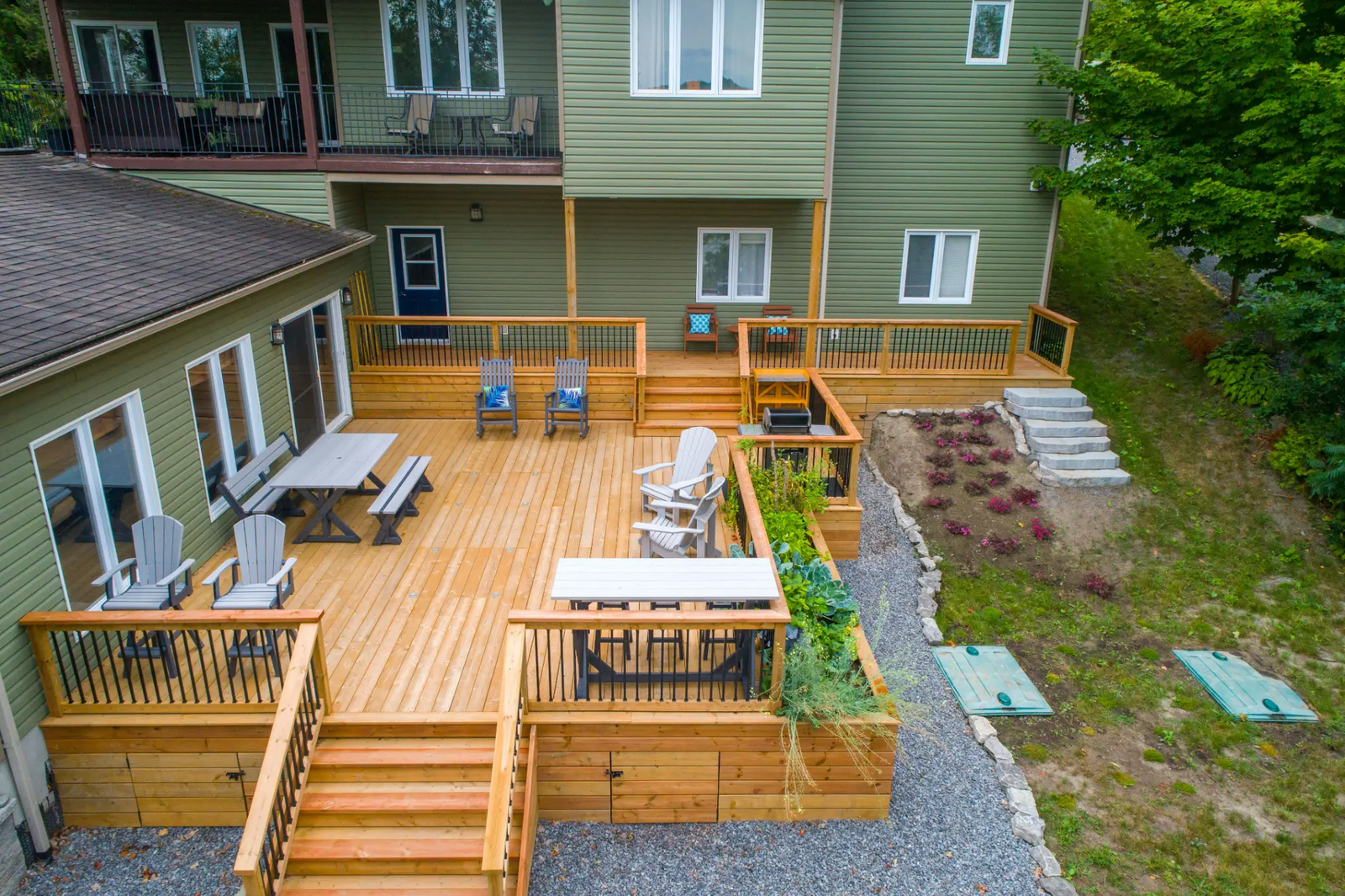
Stain soaks into the wood instead of coating the surface. The grain stays visible, and the deck keeps its natural texture. For higher-quality lumber, that is often the whole point of choosing good wood in the first place, and stain lets that show through rather than covering it up.
You have a few options with stain:
- Transparent lets almost all the grain show
- Semi-transparent adds some color while keeping texture visible
- Solid stain offers more coverage but still absorbs into the surface rather than sitting on top like paint does.
Stained deck ideas tend to lean toward warm wood tones, though solid options give you more variety if you want something closer to a painted look. The aging process is where stain really stands out. Instead of peeling or cracking, it fades gradually and evenly.
Stained deck maintenance is lighter work as a result. You usually just clean the surface, maybe do light sanding, and apply a fresh coat. That pattern of easier upkeep adds up to better longevity without the bigger prep jobs that come with painted surfaces.
Key Differences Between Painting And Staining A Deck
Understanding deck paint vs deck stain vs each other gets easier when you look at how each one actually holds up. Most homeowners tell us they did not think about the long-term differences until they were already in the middle of a problem.
These five points cover what matters most.
- How it wears: Paint tends to peel and crack as it ages. Stain fades slowly and evenly without the same kind of surface failure.
- How it looks: Paint covers the grain completely and gives a clean, uniform finish. Stain keeps the natural wood texture and character visible.
- How you maintain it: Painted deck maintenance often means heavy prep and stripping before recoating. Stained deck maintenance is usually a lighter clean and reapply process.
- How it handles moisture: Stain lets the wood breathe and move with humidity changes. Paint can trap moisture underneath if the surface film cracks or lifts.
- Overall durability: Both offer solid protection, but stain tends to hold up more consistently through seasonal changes because it moves with the wood rather than sitting on top of it.
Factors That Influence Whether To Paint Or Stain Deck
The decision to paint or stain deck surfaces comes down to more than just picking a look. In our experience, skipping this step is where most coating problems start. Working through these factors before you buy a single product makes the whole process smoother.
- Wood type and age: Newer wood takes stain well. Older or weathered surfaces often do better with the full coverage of paint. Some species also have natural oils that affect how well any coating bonds to the surface.
- Your local climate: Areas like Boise, Meridian, and the surrounding Idaho region go through hot summers and cold winters. That temperature swing puts real stress on deck coatings, so weatherproofing and durability carry more weight than in mild climates.
- Current surface condition: A deck that is already peeling needs more prep than bare new wood. The existing condition often narrows your options before you even look at products.
- What is already on the surface: Knowing your paint or stain history matters. A previously painted surface usually cannot take stain without stripping first. Skipping that step causes adhesion failures quickly.
- What you actually want from the finish: Natural look with minimal upkeep points toward stain. Bold color and full surface coverage points toward paint. Being honest about your priorities here saves a lot of frustration later.
How Different Deck Materials Respond To Paint And Stain
Not every deck material takes coatings the same way. Many coating failures come down to using the wrong product on the wrong surface, not a bad application job. Here is how the most common materials tend to respond:
Pressure-Treated Lumber
Freshly treated wood can resist absorption because of the preservatives inside it. A primer before paint helps with adhesion. Even stain can be tricky until the wood has fully dried and stabilized, which can take months after installation.
Cedar And Redwood
Both species have natural oils that can get in the way of coating adhesion if the surface is not cleaned properly first. Paint and stain can both work well once the deck is prepped. The visible grain on these woods makes stain a popular choice when the goal is to highlight the natural material.
Exotic Hardwoods
Dense hardwoods have very tight grain and low porosity. Standard coatings often struggle to penetrate without help. A sealer designed specifically for hardwoods is usually the right starting point, and even then, specialized products may be needed for the stain or paint to bond correctly.
Composite Decking
Most composite products are not meant to be painted or stained. Manufacturers typically advise against applying any surface coating at all. Always check the product specs before treating composite decking with anything.
Previously Painted Or Stained Decks
The existing coating determines what can go on next. Old paint that is peeling needs to come off before new product will bond properly. Moving from paint to stain without stripping first rarely works and usually causes problems fast.
Cost Comparison: Painting Vs. Staining A Deck
On upfront material costs, deck paint and deck stain products from quality brands sit in a fairly similar price range. Coverage rates and the number of coats needed can shift that number, but the initial purchase price alone is rarely the deciding factor.
The bigger cost difference shows up over time. Stained deck maintenance is typically cheaper per cycle because the prep is lighter and the reapplication is quicker. Painted deck maintenance can eventually require a full strip and refinishing, which adds labor and materials.
Our advice as industry experts would be to think past year one and consider what the total cost looks like over five to ten years, not just what you spend today. Labor costs also vary between the two. How to stain a deck and how to paint a deck involve different prep steps, product types, dry times, and techniques. That affects how contractors price the work. A solid estimate accounts for all of it upfront so there are no surprises once the job starts.
Get The Right Finish For Your Deck
Your deck, your wood type, your climate, and your schedule all factor into what finish will actually hold up and stay looking good. Getting that match right from the start means fewer repairs, lower long-term costs, and a surface that does its job through every season.
If you are in Boise, Eagle, Meridian, Nampa, Star, or Middleton, Idaho, Funky Painting is here to help you figure out the right approach and get it done properly. We are EPA-certified, back every project with a 5-year workmanship warranty, and keep things straightforward from the first call to the final coat. Reach out today to schedule an appointment.